The Forbidden Island · Hawaiʻi's Rarest Natural Treasure
What Are Niʻihau Shells?
And why do collectors pay thousands for them?
Found only on the remote shores of Niʻihau — Hawaiʻi's Forbidden Island — these tiny shells have been gathered by hand, sorted by color and size, and woven into lei and jewelry for generations. No two shells are identical. No two pieces are the same. And no other shell jewelry in the world carries the same cultural weight, rarity, or investment value.
Know What You're Wearing
The 4 Types of Niʻihau Shells
Each shell type carries its own character, rarity, and value. Understanding the difference is the first step to becoming a true collector.
01
Momi
The Pearl Shell
Oval, glossy, and deeply symbolic. Momi shells are prized for their shine, smoothness, and strength. The most common Niʻihau shell — but still precious. Ideal for pikake-style clusters and long single-strand lei.
02
Kahelelani
The Royal Shell
The rarest and smallest Niʻihau shell. Named for Chief Kahelelani — historically worn only by chiefs. The only shell in the world that gemologists will grade for insurance purposes. Thousands needed for a single lei.
03
Lāiki
The Rice Shell
Long, slender, and polished like grains of rice. Traditionally worn by Hawaiian brides. Queen Emmalani wore a lāiki lei when she traveled to meet diplomats in Europe — cementing its place in Hawaiian history.
04
Kāmoa
The Accent Shell
The fourth Niʻihau shell — frequently used to add contrasting color and depth to a piece. Kāmoa elevates the other shells around it, creating visual rhythm and balance in complex multi-shell lei and jewelry.
What Makes Niʻihau Shells Special
Niʻihau shells are among the rarest natural materials used in jewelry anywhere in the world.
Found only on the remote shores of Niʻihau — Hawaiʻi’s “Forbidden Island” — these tiny shells have been gathered, sorted, and woven for generations by Native Hawaiian families. Once crafted for aliʻi (royalty), they remain a treasured cultural art form rooted in patience, precision, and tradition.
Each authentic Niʻihau piece carries:
True rarity (only shells from Niʻihau qualify)
Generational craftsmanship
Natural colors shaped by the ocean
Patterns and techniques passed down for centuries
Owning Niʻihau jewelry means carrying a piece of Hawaiian history — something to wear, honor, and eventually pass down.
Types of Niʻihau Shells
1. Momi
Oval, glossy, and deeply symbolic.
Natural color variations include:
Momi keʻokeʻo – bright white
Momi ‘āhiehie – light cream
Momi ‘ōnikiniki – spotted
Momi kahakaha – striped
Momi ikaika / uliʻuli – dark gray to black
Momi shells are prized for their shine, smoothness, and strength — ideal for pīkake-style clusters.
2. Kahelelani
The rarest Niʻihau shell and the smallest used in lei-making.
Natural tones include:
pink
yellow
green
tan
salmon
deep red-toned varieties
Kahelelani shells are exceptionally prized for their brilliance and rarity.
3. Lāiki (Rice Shell)
Long, slender, and polished like grains of rice.
Typically white or ivory, lāiki are often used in:
multi-strand leis
classic kui styles
layered, luminous designs
These shells create a clean, traditional, and elegant finish.
Weaving Techniques & Patterns
Niʻihau shell jewelry is about how the shells are woven as much as the shells themselves. Each technique requires hundreds to thousands of shells, careful matching, and years of mastery.
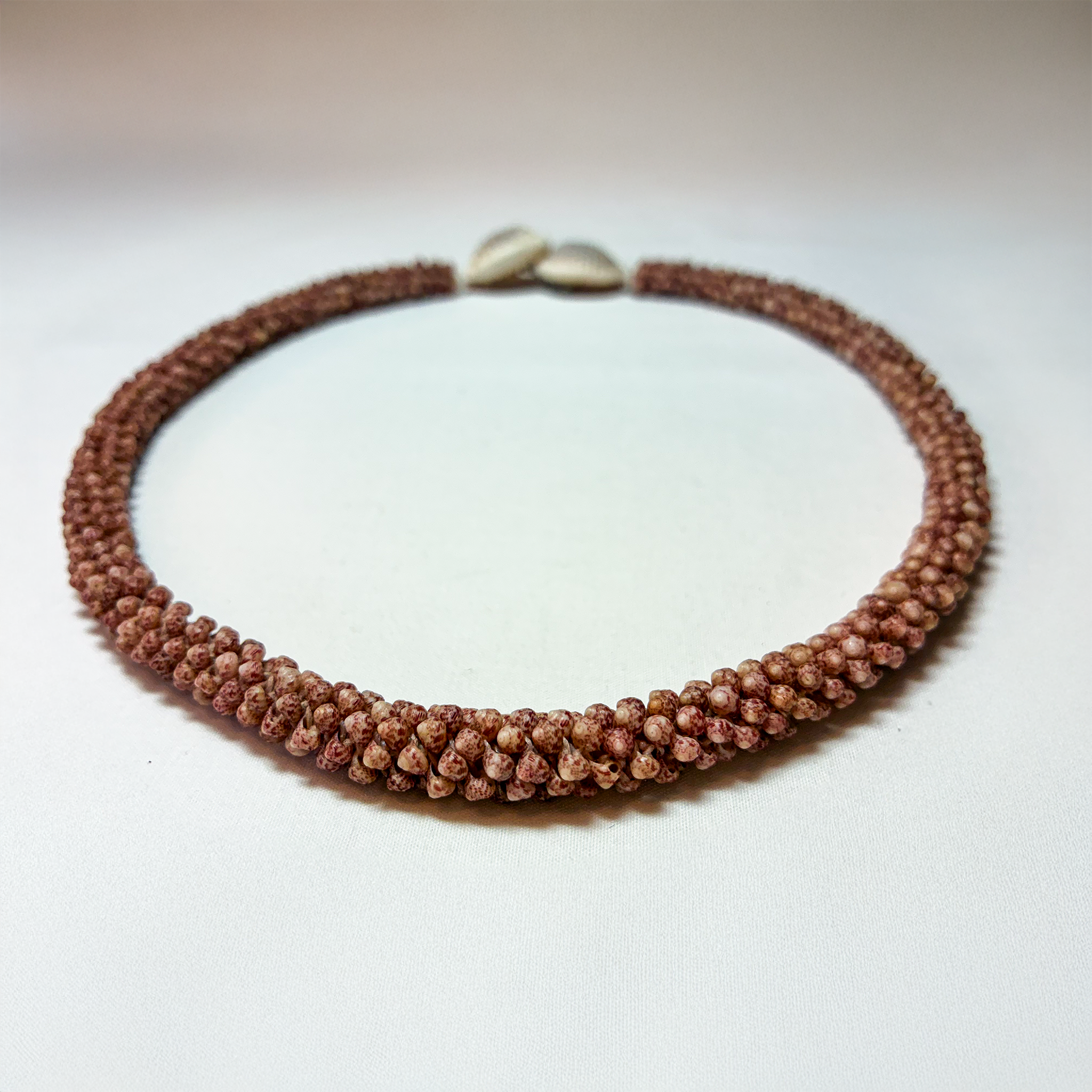
This exceptional Niʻihau Kahelelani ʻUlaʻula Lei showcases the depth and warmth of Hawaiʻi’s most treasured shells. Handwoven from rare ʻulaʻula (red) and ʻakala (pink) kahelelani shells, this lei is created in the traditional double pīkake weave — an intricate, full-bodied pattern that enhances the natural luster and color variation of each shell. Finished with polished leho (cowrie) clasps, the lei radiates both artistry and heritage, representing the highest form of shellwork passed through generations of Niʻihau artisans.
Pīkake
Rounded, floral-like clusters that mimic jasmine blossoms.
Creates fullness and texture.
Kui
A classic single-strand method where each shell is tied individually.
Graceful, timeless, and elegant.

Rare kahelelani shell earrings woven in the poepoe cluster style, showcasing Niʻihau’s most prized shells in natural color variation. Each pair is unique and finished with gold-filled hooks.
Poepoe
Shells are layered into rounded, ball-like clusters along the strand, adding dimension and movement.
ʻŌnikiniki / Kahakaha
A technique of selecting shells with specific natural markings.
These patterns add rarity, contrast, and value.
Hawaiʻi State Law
Niʻihau shell jewelry is protected under Hawaiʻi State Law (H.B. 2569, 2004).
To legally be called “Niʻihau” or “Niʻihau shell jewelry,” a piece must:
✔ Contain at least 80% Niʻihau shells (most fine pieces are 100%)
✔ Be crafted entirely in Hawaiʻi
✔ Use shells collected only on Niʻihau
This law protects both buyers and the cultural heritage of Niʻihau artisans.
Authenticity & Appraisal
Because genuine Niʻihau shell jewellery is extremely rare and precious, authenticity is vital. In 2004 Hawaiʻi passed legislation (H.B. No. 2569) protecting the term “Niʻihau” — only pieces using shells gathered on Niʻihau and crafted entirely in Hawaiʻi may use that name. Niihau Heritage Cultural Foundation |
Appraisals are typically performed by recognised makers and longstanding artisan families who understand shell type, colour rarity, weave complexity and provenance. While there is no single official appraisal board, trusted artisans and galleries familiar with Niʻihau tradition provide certificates and valuation guidance. Niihau Heritage Cultural Foundation |+1
Why It Matters
Every shell in a Niʻihau shell piece carries both nature’s quiet beauty and the personal touch of a maker’s hands. The subtle colour shifts, the weave style, and the careful selection — all reflect a jewellery form that is as much art as adornment. For your collection, this means each piece is not just something you wear, but something you inherit, honor and display.